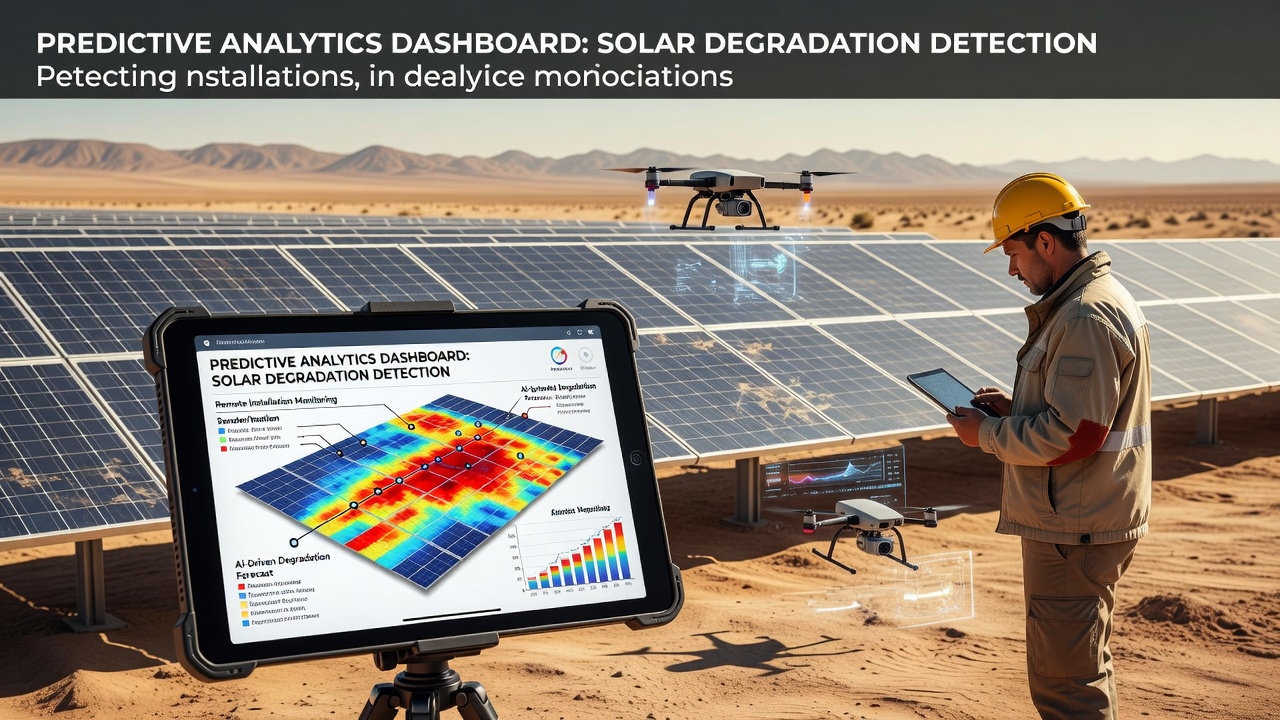
Hugo Meier · 7 October 2026
Advancements in Predictive Analytics for Detecting Solar Panel Degradation in Remote Installations
Remote solar installations face unique operational demands because they often sit far from service teams and rely on consistent energy output without frequent on-site checks, and predictive analytics now plays a central role in identifying panel degradation before it leads to major losses. Data streams from sensors, weather stations, and satellite imagery feed into machine learning models that track performance trends over months and years, allowing operators to schedule maintenance based on projected failure points rather than fixed calendars. Research from institutions across multiple regions shows these systems reduce unplanned downtime by analyzing patterns in voltage output, temperature fluctuations, and soiling accumulation that traditional monitoring overlooks.
Core Technologies Driving Detection Accuracy
Algorithms combine time-series forecasting with computer vision techniques to spot microcracks and delamination that develop gradually in harsh environments, and studies indicate accuracy rates above 85 percent when models train on at least two years of site-specific data. IoT devices transmit readings every fifteen minutes from inverters and pyranometers, while edge computing processes initial filters locally to cut transmission costs in areas with limited bandwidth. According to reports from the National Renewable Energy Laboratory, integration of these elements has improved early detection of potential power loss by up to 30 percent compared with rule-based alerts alone.
Thermal imaging drones supplement ground sensors during periodic flyovers, feeding infrared data into the same predictive frameworks so operators receive unified risk scores for each string of panels. Machine learning models update continuously as new environmental variables enter the dataset, and this adaptability proves especially valuable in desert or high-altitude sites where dust storms or extreme temperature swings accelerate wear.
Implementation in Challenging Locations
Installations in northern Canada and central Australia demonstrate how predictive systems handle extreme seasonal variations, with one project reporting a 22 percent drop in replacement costs after shifting from reactive repairs to model-guided interventions. Data from these sites flows into centralized platforms that compare real-time metrics against historical baselines for similar climates, flagging anomalies such as unexpected efficiency drops during peak sunlight hours. Observers note that combining local weather forecasts with degradation predictions allows crews to time visits during accessible windows, reducing helicopter or overland logistics expenses that can exceed thousands of dollars per trip.
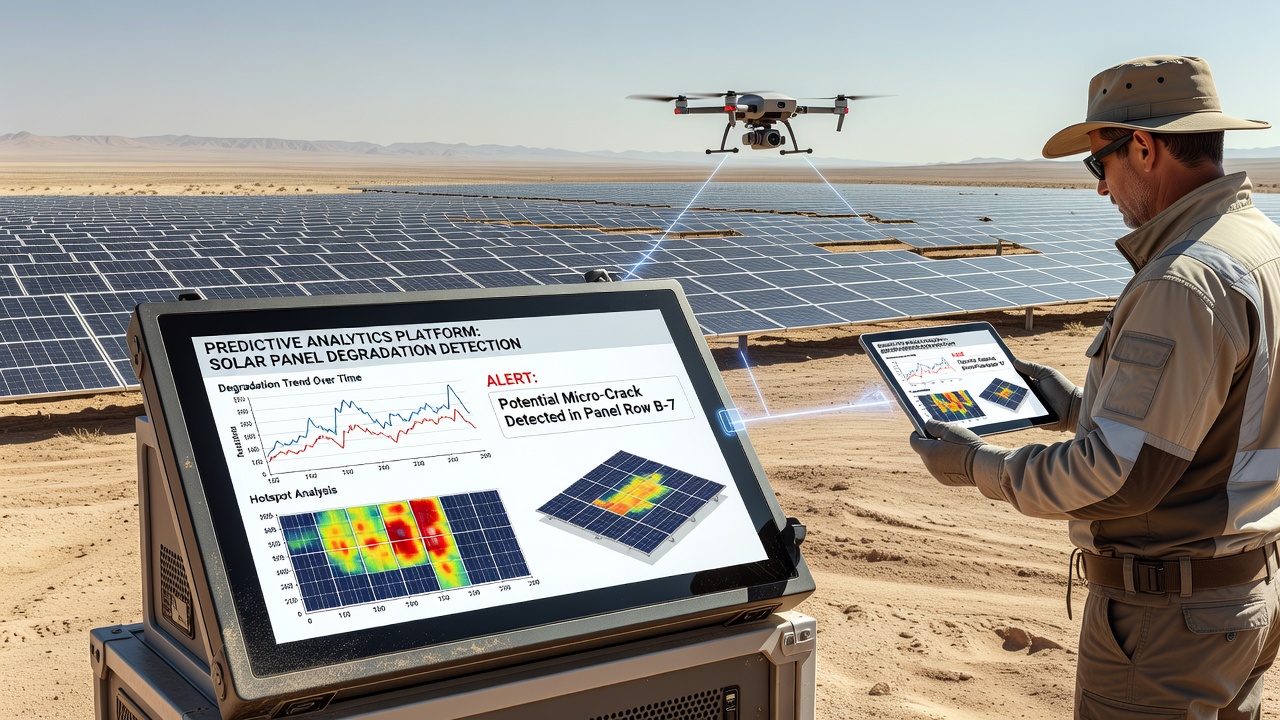
European research consortia have tested similar frameworks in mountainous regions where snow cover and rapid weather changes complicate access, and findings presented in October 2026 at an international renewable energy symposium highlighted a 40 percent improvement in fault localization speed when satellite-derived irradiance data merged with on-site sensor streams. These approaches rely on open-source libraries for anomaly detection alongside proprietary calibration tools that account for panel age and manufacturer specifications, ensuring outputs remain consistent across mixed-technology arrays.
Data Sources and Model Refinement
Public datasets from the Australian Renewable Energy Agency supply standardized performance records that help train models for arid conditions, while private operators contribute anonymized logs to refine regional benchmarks. Analysts apply ensemble methods that blend regression trees with neural networks to handle the nonlinear relationships between irradiance, humidity, and output decline, and cross-validation against independent test sites confirms robustness. Continuous feedback loops let technicians label confirmed degradation events so the system learns from its own recommendations over successive seasons.
Security protocols encrypt sensor feeds during transmission because many remote arrays connect through low-power wide-area networks that remain vulnerable to interference, and regulatory guidelines in several countries now require audit trails for any automated maintenance decisions. This framework supports both small-scale off-grid systems serving individual communities and utility-scale farms spanning hundreds of hectares.
Conclusion
Predictive analytics continues to evolve as sensor costs fall and computational resources become more accessible in isolated regions, delivering measurable gains in uptime and cost control for operators managing distant solar assets. Integration of diverse data streams from ground sensors to orbital imagery creates a clearer picture of degradation trajectories, enabling proactive responses that align with actual site conditions rather than generic schedules. As more installations adopt these methods, shared repositories of performance data accelerate further refinements across different climates and panel types.