
Bianca Braun · 23 September 2026
The Evolution of Off-Grid Power Solutions Through Advanced Monitoring Techniques
Early Foundations of Independent Energy Systems
Off-grid power solutions began with simple setups that relied on lead-acid batteries paired with basic photovoltaic panels, and observers note these arrangements required manual voltage checks that often led to unexpected outages during extended cloudy periods. Research from the 1990s shows that early adopters in remote regions combined diesel generators with small wind turbines, yet the lack of real-time data meant efficiency remained low until digital tools started appearing in the early 2000s. Data indicates that by 2010, lithium-ion batteries had entered the market and reduced weight while increasing cycle life, which allowed more consistent power delivery in cabins and agricultural sites across North America and Australia.
Shift Toward Integrated Monitoring Platforms
Advanced monitoring entered the picture once microcontrollers and wireless sensors became affordable, and those who studied deployment records found that systems could now track charge levels, temperature, and load patterns without constant human intervention. Studies conducted through 2018 revealed that adding cellular modems to battery banks let owners receive alerts on smartphones, which cut response times during faults from days to minutes. Government reports from the US Department of Energy highlight how these early IoT integrations improved overall system uptime by measurable percentages in field trials conducted in the southwestern states.
By the mid-2020s, cloud platforms aggregated data from multiple sites, and researchers discovered patterns that predicted component failures weeks ahead. This capability proved especially useful in European mountain communities where access during winter storms remains limited, and figures from regional energy agencies show maintenance costs dropped as predictive algorithms replaced scheduled service visits.
Current Capabilities in Sensor Networks and Analytics
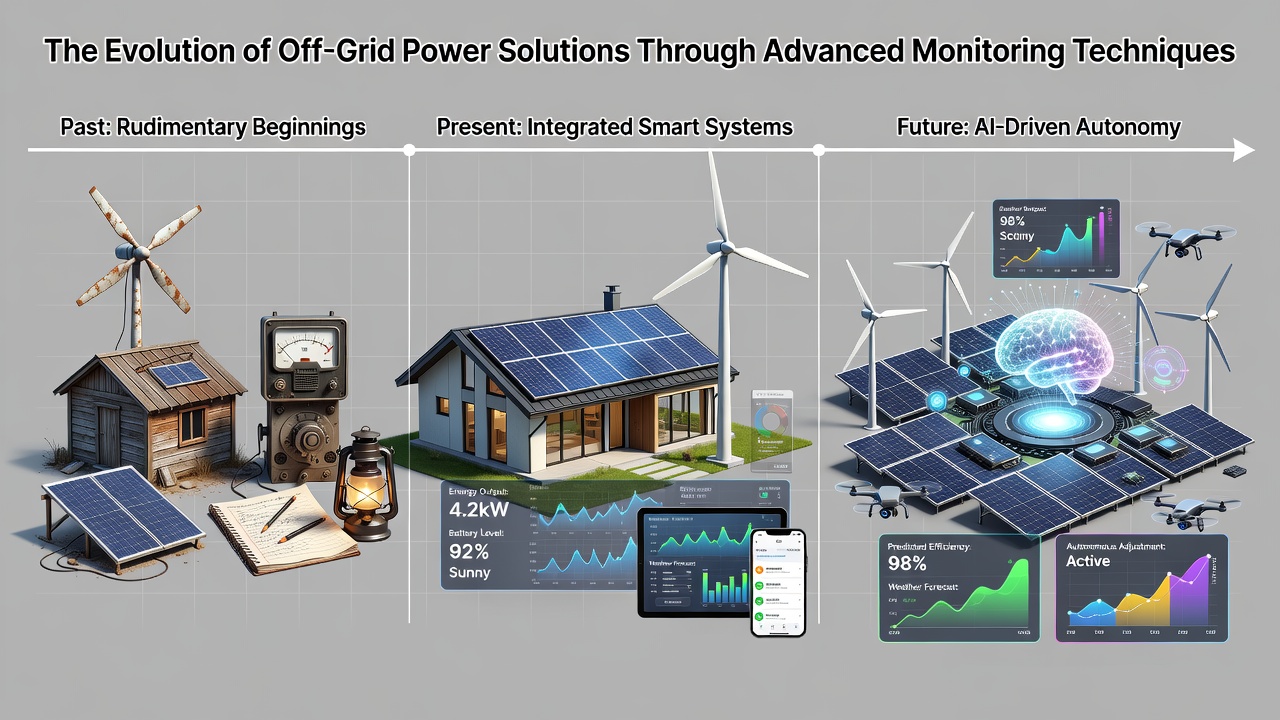
Today's solutions combine edge computing devices with machine-learning models that analyze voltage curves, current flows, and weather forecasts simultaneously, and experts observe that these combined inputs allow automatic load shedding before batteries reach critical discharge levels. In September 2026, several utility-scale microgrid projects in Canada plan to release performance data collected over the previous twelve months, and preliminary summaries already indicate that continuous monitoring has extended battery lifespan beyond original manufacturer projections. Those who've examined the datasets note that AI-driven optimization routines adjust inverter settings in response to solar irradiance changes measured every thirty seconds.
Wireless mesh networks now link individual panels, charge controllers, and storage units so that a single fault does not cascade through the entire array, and industry reports from the Australian Renewable Energy Agency document how such redundancy improved reliability scores in outback installations. Monitoring dashboards display historical trends alongside live metrics, which helps operators identify seasonal inefficiencies that manual logs previously missed. European Commission energy statistics further confirm that regions adopting these layered sensor approaches recorded higher percentages of renewable penetration in off-grid applications compared with areas using legacy equipment.
Practical Outcomes and Geographic Variations
Remote research stations in Antarctica have adopted similar monitoring suites to manage wind and solar hybrids under extreme temperature swings, and published logs show that automated alerts prevented several potential system shutdowns during the 2024 polar winter. In contrast, tropical installations in Southeast Asia rely more heavily on humidity and corrosion sensors because salt air accelerates hardware degradation, and local engineering teams report that targeted monitoring reduced replacement frequency by roughly one-third. These examples illustrate how the same core technology adapts to different environmental stresses without requiring entirely new hardware designs.
Conclusion
Off-grid power solutions continue to advance as monitoring techniques grow more sophisticated, and the integration of real-time data streams with predictive analytics marks the primary driver behind improved reliability and efficiency. Records from multiple continents demonstrate consistent gains in system longevity and reduced operational costs once continuous oversight replaced periodic manual inspections. As additional performance metrics become available in late 2026, further refinements in algorithm accuracy and sensor durability are expected to follow the same established trajectory.